
The Science Behind Facial Recognition
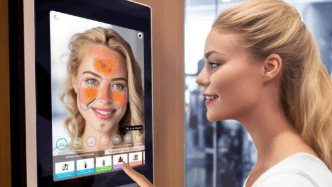
Artificial intelligence has transformed the way machines interpret human faces, turning simple images into detailed data points. At the heart of celebrity face match technology lies facial recognition, a process that identifies and compares facial features using complex algorithms. AI systems analyze key landmarks on the face, such as the distance between the eyes, the shape of the jawline, and the contour of the nose. These features are converted into numerical representations, often called face embeddings, which allow machines to compare one face with thousands or even millions of others efficiently.
This process is not about simply overlaying two images and checking similarities. Instead, AI uses deep learning models trained on vast datasets of faces to understand patterns and variations. Lighting conditions, facial expressions, and angles can all affect how a face appears, yet modern systems are trained to handle these differences. By focusing on stable facial features, AI ensures that comparisons remain accurate even when images vary in quality or context. This scientific foundation is what makes celebrity face match tools both powerful and reliable in identifying lookalikes.
Deep Learning Models and Training Data
The intelligence behind celebrity face match comes from deep learning, particularly convolutional neural networks (CNNs). These models are designed to process visual data and recognize patterns within images. During training, the AI is exposed to millions of labeled face images, learning to distinguish between different individuals while also recognizing similarities. Over time, the model becomes highly skilled at identifying subtle facial traits that humans might overlook.
Training data plays a critical role in the accuracy of these systems. The more diverse and comprehensive the dataset, the better the AI can perform across different ethnicities, ages, and facial structures. Developers must ensure that datasets are balanced to avoid bias, as an imbalanced dataset can lead to inaccurate or unfair results. Once trained, the model can analyze a user’s photo and compare it against a database of celebrity images, calculating similarity scores to find the closest match. This combination of advanced models and robust data is what enables AI to deliver surprisingly precise results.
Feature Extraction and Similarity Scoring
Once an image is processed, the AI extracts unique facial features and converts them into a mathematical representation. This step, known as feature extraction, reduces a complex image into a manageable set of data points. Each face is essentially turned into a vector in a high-dimensional space, where similar faces are positioned closer together. This allows the system to measure how alike two faces are by calculating the distance between their vectors.
Similarity scoring is the next step, where the AI compares the user’s face vector with those stored in its database. The system assigns a score based on how closely the features align. A higher score indicates a stronger resemblance. This is how celebrity face match tools can quickly identify which public figure a user most closely resembles. The process is incredibly fast, often taking only seconds, thanks to optimized algorithms and powerful computing resources. Despite its speed, the system maintains a high level of accuracy, making it both efficient and engaging for users.
Applications Beyond Entertainment
While celebrity face matching is often seen as a fun and engaging feature, the underlying technology has far broader applications. Facial recognition is widely used in security systems, enabling devices to unlock with a glance or helping authorities identify individuals in surveillance footage. In the healthcare sector, AI can assist in diagnosing certain genetic conditions that have distinct facial characteristics. Similarly, in marketing and retail, businesses use facial analysis to understand customer demographics and personalize experiences.
The entertainment aspect, however, has played a significant role in popularizing this technology. Social media apps and mobile platforms have integrated celebrity face match features to جذب users and encourage interaction. By allowing people to discover their celebrity lookalike, these tools create a sense of curiosity and fun. This widespread adoption has also helped improve the technology, as more user interactions provide valuable data for refining algorithms and enhancing performance.
See also: Blog Content Discovery Guide Posts Nixcoders.Org Blog Explaining Technology Article Searches
Challenges Ethics and Future Innovations
Despite its impressive capabilities, celebrity face match technology is not without challenges. Privacy concerns are one of the biggest issues, as facial data is highly sensitive. Users must trust that their images are handled securely and not misused. Developers are increasingly focusing on data protection measures, such as encryption and anonymization, to address these concerns. Ethical considerations also come into play, particularly regarding consent and the potential misuse of facial recognition in surveillance.
Looking ahead, the future of AI-powered face matching is full of possibilities. Advances in machine learning are expected to improve accuracy even further, making it possible to identify matches across different ages or even predict how a person might look in the future. Integration with augmented reality could allow users to see themselves transformed into their celebrity match in real time. As technology continues to evolve, the balance between innovation and ethical responsibility will be crucial. Celebrity face match tools are just the beginning of a much larger journey in understanding and interpreting human identity through artificial intelligence.