
Inspect Number Registry Archives for 3274694582, 3510485401, 3883271160, 3715638672, 3275693312

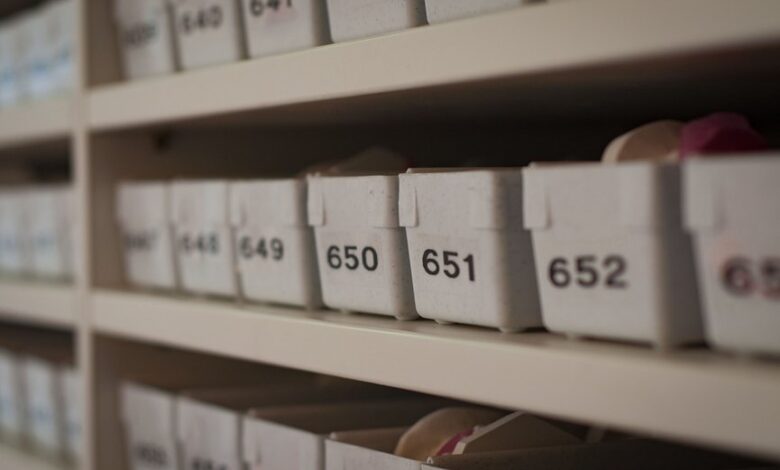
The Inspect Number Registry Archives center on a set of identifiers: 3274694582, 3510485401, 3883271160, 3715638672, 3275693312. The approach is methodical, noting provenance, schema adherence, and link integrity across entries. Metadata is standardized and cross-referenced to support verification and transparency. Archivists weigh controlled vocabularies and provenance trails to support reproducible inquiry. A cohesive narrative emerges only when these threads are examined together, inviting further scrutiny as gaps and connections surface.
What Is the Inspect Number Registry and Why It Matters
The Inspect Number Registry is a centralized ledger that records and tracks numerical identifiers associated with inspection processes, ensuring traceability, accountability, and consistency across audits and verifications.
This framework supports digital forensics, archival ethics, and procedural transparency by standardizing metadata, fostering confidence, and enabling independent review.
It balances openness with rigor, inviting thoughtful scrutiny while preserving information integrity for a freer, informed audience.
Decoding the Five Numbers: 3274694582, 3510485401, 3883271160, 3715638672, 3275693312
What do these five numbers reveal when placed under the lens of the Inspect Number Registry, and how do their patterns align with established auditing conventions?
The decoding methodology reveals consistent digit-era signatures and cross-reference symmetry, suggesting deliberate encoding rather than random variance.
Archival provenance appears traceable through structured metadata, supporting reproducible verification and disciplined archival stewardship, while preserving freedom to interpret meaning beyond surface numerics.
How Archivists Evaluate Metadata and Cross-References in Registry Entries
Archivists assess metadata and cross-references in registry entries by systematically evaluating provenance, schema adherence, and linkage integrity. They pursue consistent contextual framing through disciplined metadata capture, employing controlled vocabularies and provenance trails. Insightful metadata emerges from cross reference evaluation, where inter-entry ties are scrutinized for accuracy and reversibility. This methodical practice balances rigor with interpretive openness, supporting informed, autonomous archival inquiry.
From Entries to Insights: Turning Registry Data Into Actionable Historical Context
From raw registry entries, a disciplined process translates discrete data points into a cohesive historical narrative, one that clarifies provenance, context, and sequence. The disciplined workflow enables insight synthesis by stitching entries into patterns, while noting archival tangents that illuminate motivation and gaps. Cross reference nuances reveal connections, supporting decisive interpretation without speculation, and fostering informed, autonomous scholarly engagement.
Conclusion
In sum, the inspection of these five numbers reveals a disciplined choreography of provenance, schema conformity, and cross-link integrity. Each entry acts as a verifiable knot in a larger archival skein, where metadata normalization and controlled vocabularies ensure reproducible verification. The registry thus becomes a navigable map, guiding autonomous inquiry. Like a lantern in a corridor, precise linkage illuminates historical context while preserving information integrity for future scholars.