
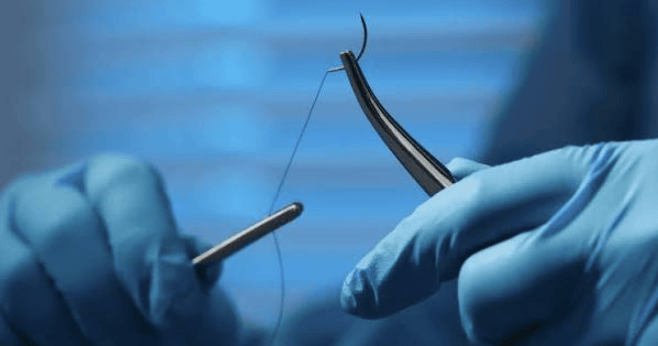
Among the wide range of specialized instruments used in surgical procedures, suture hooks occupy a small but essential role in facilitating precise tissue manipulation and suture placement during procedures where direct finger access is limited or where controlled tension needs to be maintained on tissue while sutures are placed. Understanding the design considerations behind these instruments helps clarify why seemingly minor variations in hook design can meaningfully affect surgical outcomes.
The Functional Purpose of Suture Hooks
A suture hook is designed to retract, position, or apply controlled tension to tissue during suturing, allowing surgeons to maintain visibility and access to the surgical site while simultaneously managing tissue positioning. This dual function, providing both retraction and precise control, distinguishes suture hooks from simpler retraction instruments that primarily hold tissue out of the way without the fine control needed for suture placement guidance.
Material Selection and Manufacturing Standards
Surgical instruments, including surgical suture hook designs, are typically manufactured from surgical-grade stainless steel, selected for its combination of corrosion resistance, sterilization compatibility, and the ability to maintain a precise edge or point over repeated use and sterilization cycles. Manufacturing tolerances need to be tight enough to ensure consistent hook geometry across production batches, since even small variations in hook curvature or tip sharpness can affect how the instrument performs during delicate surgical maneuvers.
Hook Geometry and Clinical Application
Different surgical specialties and procedures often call for variations in hook curvature, length, and tip design, reflecting the specific tissue handling requirements of each application. Finer, more delicate hook designs suit procedures involving delicate tissue structures where excessive force could cause damage, while more robust hook geometries may be appropriate for procedures involving tougher tissue types that require firmer retraction and tension control.
Sterilization and Reusability Considerations
Given that surgical instruments undergo repeated sterilization cycles throughout their service life, the materials and manufacturing processes used need to withstand this repeated thermal and chemical stress without degrading in performance or developing corrosion that could compromise instrument safety. Manufacturers producing reusable surgical instruments need to validate that their products maintain dimensional accuracy and structural integrity across the expected number of sterilization cycles specified for the instrument.
See also: Medical Term Discovery Hub Oforektomerad Explaining Health Related Searches
Ergonomic Design Factors
Beyond the functional tip geometry, handle design plays a meaningful role in how effectively surgeons can control fine hand movements during precise suturing tasks, particularly during lengthy procedures where hand fatigue can affect surgical precision. Instrument manufacturers increasingly incorporate ergonomic handle designs that reduce grip fatigue while maintaining the tactile feedback surgeons rely on during delicate tissue manipulation.
Quality Assurance in Medical Instrument Manufacturing
Given the direct patient safety implications associated with surgical instruments, manufacturers need to maintain rigorous quality control processes throughout production, including dimensional verification, material certification, and compliance with relevant medical device manufacturing standards applicable in their target markets.
Conclusion
Suture hooks represent a clear example of how instrument design details that might seem minor on the surface can meaningfully affect surgical precision and patient outcomes. Careful attention to material selection, hook geometry, and manufacturing quality control remains essential for producing instruments that reliably meet the demanding standards of modern surgical practice.
FAQs
Q1: What material are surgical suture hooks typically made from? Most are manufactured from surgical-grade stainless steel, chosen for corrosion resistance and the ability to maintain precision through repeated sterilization cycles.
Q2: Why do different procedures require different hook geometries? Tissue types and surgical access requirements vary by procedure, so hook curvature, length, and tip design are adapted to match the specific tissue handling needs of each application.
Q3: How many sterilization cycles can a reusable suture hook typically withstand? This varies by manufacturer and material specification, and instruments should be used within the sterilization cycle limits validated and specified by the manufacturer.